By Clement Lau
The following piece is part of Progressive City’s “Keeping the ‘Public’ in Public Space” series, which asks authors to address the way public spaces are governed, restricted and/or policed, in addition to the role of planning in both enabling and contesting the enclosure of public space. Of special concern are policies, designs and practices that limit the use of public spaces, formally or informally, based on the race, gender, sexuality, disability and national origin of people. More information about this series can be found here.
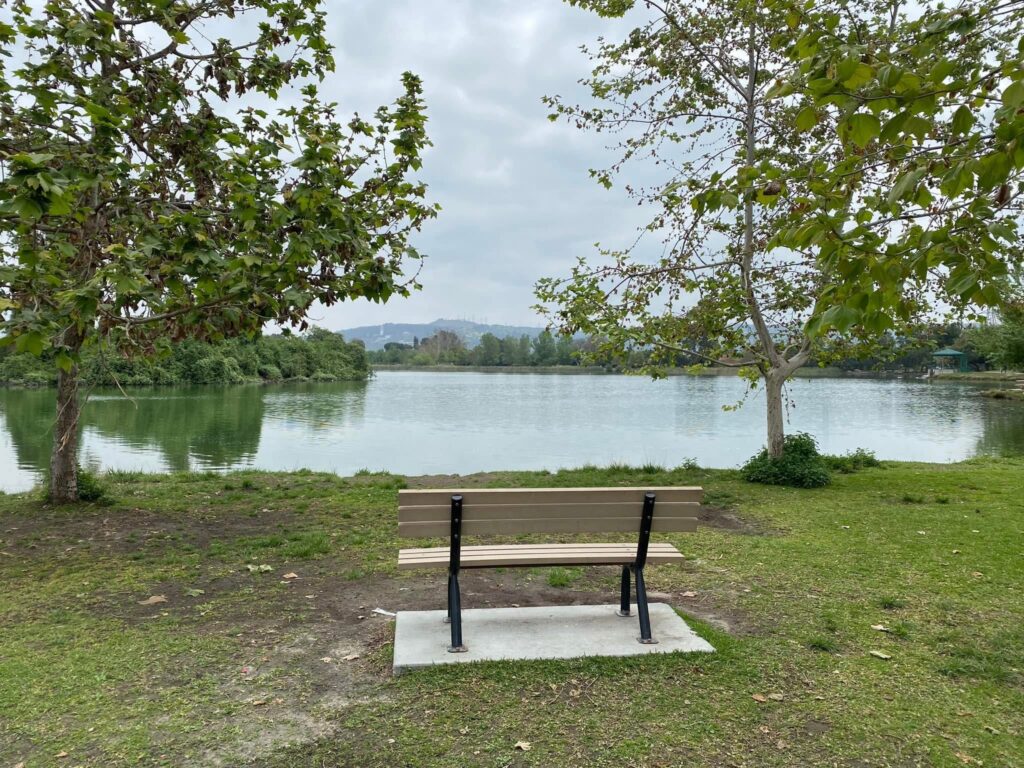
Public parks are meant to be places where people can simply exist without having to show identification, buy something, explain themselves, or justify their presence. They can arrive early in the morning or late in the afternoon, come alone or with family, speak any language, sit quietly, exercise, celebrate, or simply pass through. At their best, parks function as spaces where everyday life unfolds with minimal barriers.
That openness, however, is fragile. A park can be physically open and legally public, yet still fail to function as a shared space if people do not feel safe enough to use it. Safety, in this sense, is not only about crime, lighting, and/or maintenance. It can also reflect whether people fear being questioned, targeted, or removed simply for being there. When that fear takes hold—particularly among families, elders, workers, unhoused or immigrant communities—parks may remain open on paper while becoming inaccessible in practice.
Recent incidents in Los Angeles County have brought this tension into sharper focus and raised a broader question that extends beyond any single policy debate: what does it take for parks to function as truly safe and shared public spaces?
When enforcement reshapes public space
In October 2025, federal immigration agents conducted an enforcement operation at and near Deane Dana Friendship Park and Nature Center. According to public reporting and statements by LA County officials, three individuals were detained during the operation, and park employees were prevented from carrying out their regular duties. County officials stated that federal agents threatened to arrest park staff who responded to the scene, prompting concern about interference with regular park operations. The presence of these agents reportedly discouraged community use and altered how people perceived the park, with some choosing to stay away in the days that followed.
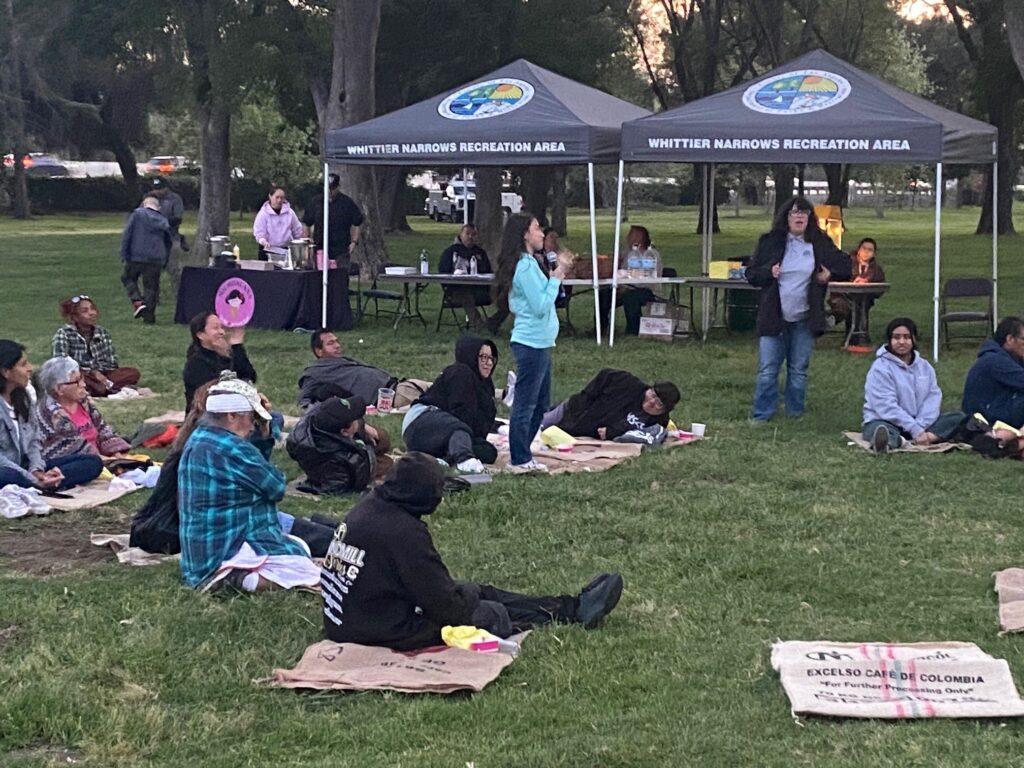
In another incident in January 2026, two park employees at Whittier Narrows Recreation Area were stopped, questioned, and reportedly physically assaulted by federal agents while working in uniform and clearly identified as county staff. The employees were Latino and were performing routine park duties at the time. The incident prompted public condemnation from elected officials and community advocates, who described it as racial profiling and a serious breach of trust and cited it as evidence that enforcement activity was disrupting the intended public use of county parkland.
Although these incidents differ in context, they share an important outcome: they reshaped how shared park spaces were experienced by the people who work there and the communities who rely on them. The presence—or perceived possibility—of federal agents can transform a park from a place of recreation and respite into one marked by anxiety, uncertainty and potentially, violence.
Park planners often measure access in terms of acreage, distance, and/or amenities. While these metrics are important, they do not capture whether people feel safe enough to enter a space and remain there. In shared spaces, perception can matter as much as formal policy. What people see, hear, and anticipate shapes whether a park feels welcoming or risky. A single visible encounter, repeated stories shared within a community, or uncertainty about what may happen can be enough to alter behavior.
Over time, this shift manifests in subtle but meaningful ways. People may visit less frequently, stay for shorter periods, or stop coming altogether. The cumulative effect is a quiet withdrawal that undermines the very purpose of public parks, diminishing informal gatherings, weakening casual social interaction, and reducing the everyday presence that helps parks function as shared commons.
Parks are not neutral spaces
Parks are often described as neutral ground, but they are not impartial in how they are governed. Rules, enforcement practices, interagency coordination, and informal norms all send signals about who belongs. These cues may be unintentional, but they are powerful in shaping how space is experienced.
Decisions about what activities are appropriate in certain settings are routine aspects of public space management. For example, school zones are designated, vehicles are restricted, commercial activity is limited, and wildlife protection areas are established. These choices are not about eliminating authority altogether. Rather, they are about aligning how space is used with its primary civic purpose.
Viewed through this lens, the core issue raised by recent incidents is not whether specific actions are lawful or unlawful. It is whether certain forms of authority are compatible with the role parks are intended to play in everyday life, particularly for communities that already experience heightened scrutiny in public space.
Why this matters beyond any single issue
While recent attention has focused on immigration enforcement, the implications extend well beyond that context. If parks become places where people feel watched rather than welcomed, the impact is not limited to one group. Unhoused residents, youth, people with disabilities, and communities of color have long navigated public spaces shaped by disproportionate surveillance and control. For them, additional enforcement activity does not introduce a new dynamic so much as deepen existing mistrust. When oversight expands or becomes more visible, it can reinforce perceptions that public space is conditional rather than shared.
When parks become associated with risk rather than refuge, communities lose more than recreational opportunities. They are also deprived of informal social networks, public health benefits, and the everyday interactions that help neighborhoods function. Rebuilding trust once it has been eroded is far more difficult than protecting it in the first place.
Parks as sites of civic belonging
At the same time, public parks can—and sometimes do—function as powerful sites of civic inclusion and belonging. In the Santa Monica Mountains National Recreation Area, dozens of immigrants from around the world have been sworn in as U.S. citizens during naturalization ceremonies held in a park setting. These events are part of a partnership between the National Park Service and U.S. Citizenship and Immigration Services.
Moments like these highlight a different use of public space: not as a site of surveillance or exclusion, but as a place where individuals are formally welcomed into civic life. They underscore the symbolic and practical role parks can play beyond recreation, serving as spaces where belonging is affirmed and shared identity is made visible.
Keeping parks public in practice
Keeping parks truly public requires examining how enforcement protocols, signage, communication practices, interagency agreements, and on-the-ground coordination shape how parks are experienced. Public agencies must be clear about the role parks are meant to play and ensure that enforcement authority reflects that purpose. Listening closely to those most affected provides an essential check on whether management practices foster belonging or unintentionally discourage use.
In concrete terms, planners directly shape park design — including whether benches include unnecessary dividers that discourage rest — as well as the rules and signage that govern how parks are used, such as broad “no loitering” notices that undermine open access. They also help ensure that park rules are applied fairly, that agencies coordinate in ways that support everyday use, and that community members, including through advisory committees, have meaningful roles in guiding park design and regulations.
At their best, parks are places where everyday recreation and community life unfold side by side — where families gather, elders walk shaded paths, children learn to ride bicycles, and neighbors pause for conversation. They are also places where communities mark important milestones, from birthday parties to naturalization ceremonies. To serve these roles, parks must be experienced as safe and welcoming. When people can enter and remain without hesitation, parks fulfill their promise as places of shared belonging.
Clement Lau is a planner and writer with over 17 years of park planning experience in Los Angeles County.