By Shehana
The following piece is part of Progressive City’s “Contesting the University as Planner, Occupier, and Developer” series, which asks authors to examine the role of academic institutions in (re)shaping cities and how planning practitioners, activists, educators, students, or other actors can contest their harmful impacts both from within and outside these institutions. More information about this series can be found here.
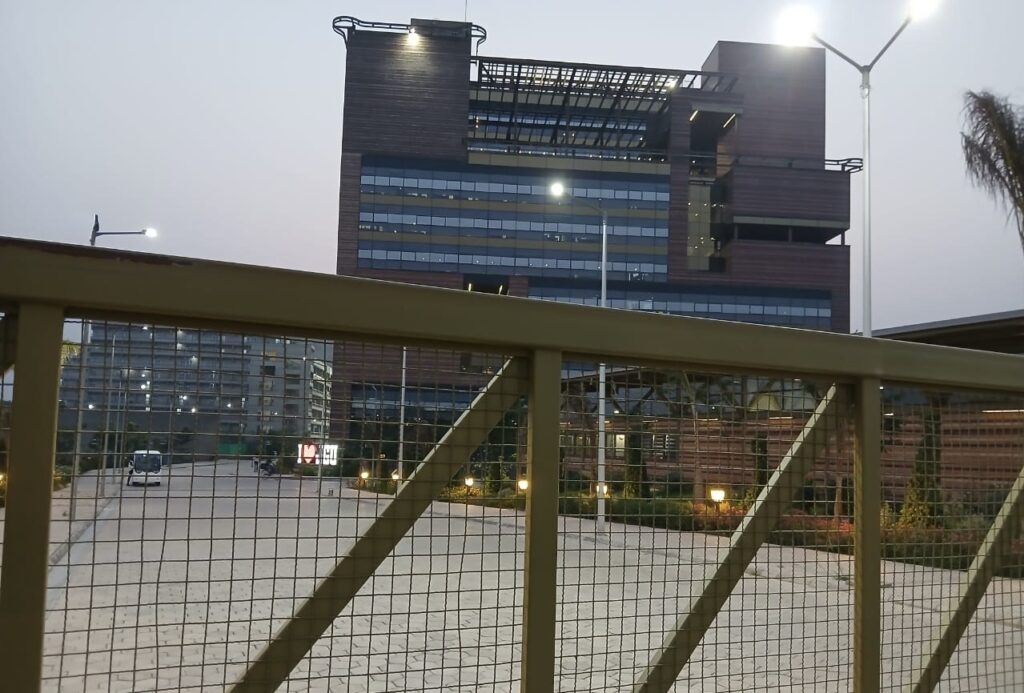
“It’s a perpetually renewing space,” says a young faculty member of a private elite university in India. These universities, branded as the ‘Harvard of the East,’ are distinct due to their strategic location in urban fringes or special economic zones, reshaping India’s urban landscape. For instance, Jawaharlal Nehru University in Delhi (JNU), established during the tenure of then-Prime Minister Indira Gandhi as part of a nation-building process, was designed by architect CP Kukreja in accordance with the revolutionary and progressive ideals of community and student-teacher togetherness. Across India, cities such as Gujarat, Hyderabad, Andhra Pradesh, Lucknow, and Delhi have introduced knowledge and innovation hubs that serve as catalysts of urban development in the urban periphery, especially along national expressways and metro expansion projects. These initiatives include the establishment of foreign universities similar to those found in education cities in other parts of Asia and the Middle East, but with their own peculiarities. State seizure of land in the urban fringe, often justified as development, has led to ‘silent displacement’ and a lack of community engagement.
Gurgaon, the “millennium city” of the National Capital Region, now hosts a campus of the University of Southampton. There is increasing financial interest in university enclaves, contrasting the longstanding lack of infrastructure, funding, and resources faced by other educational institutions in India. In researching this topic, I conducted interviews with various stakeholders to gain insight into their perspectives on the notion of a “world-class city” and education hub in the urban periphery. This short piece offers excerpts of these conversations that highlight the contradictions of these highly corporate universities. These new university spaces stand in contrast with India’s public universities, with their hyper-glossy modern structures, flashy digital posters, swimming pools, massive convention centres, food courts akin to those in shopping complexes, and libraries backed by international private sector banks.
Dissonance
During my interviews in these universities, faculty members frequently used the term ‘dissonance’ to describe their experience in an emerging global city. One interviewee provided insight into architectural aspects of these spaces:
I feel these spaces are glossy all the time, and it is perpetually renewing. Everything is neatly stacked, and it shows an architectural obsession in every nook and corner. Some of the structures have started to show wear, and I feel pretty comfortable with that. However…..The fundamental imagination of the university is disconnected—the unstructured time and the leisure often facilitated by the corridors or hostels. I usually feel that the corridors play a considerable role, as I come from public universities like JNU and DU (Delhi University). I found it very incongruent.
Signboards featuring the logos of Emirates and Etihad airlines loom over sports facilities on these campuses, highlighting the commercialized and brand-driven nature of these spaces. The same logic of consumption and display spills over into the surrounding environments.
Community Outreach and the Corporate University
Hannah (pseudonym), another faculty member, highlighted issues with the corporate character of these universities. She noted that, despite the university’s initial liberal overtures, it later revealed its true corporate nature through discouraging labour unions and reprimanding faculty members, daily wage labourers, and other staff. She recalled the administration warning the faculty: “Please be grateful for your job. Don’t try to create critical thinking or political consciousness here.” She continued:
We informally established a legal aid clinic to help residents understand their rights and offer free legal advice as part of a broader community-building effort on campus. However, the administration later discouraged this…We used to visit the locals and begin with questions about access to water, female foeticide, and schoolgirls’ education—“school girls ke padhai”—and that’s how we would approach the sarpanch ( elected head of the village).
But it soon became evident that they knew how to present everything as usual and acceptable, especially when NGOs or university people were involved. The administration later began interfering, particularly by issuing circulars discouraging unionisation. Initially, they were approachable, but slowly, the institution started to feel more like an employer. It’s now an employer-employee relationship. Now, the university has acquired social capital as a hub of international education and has become a money-spinner focused on marketing and international branding, with even an exclusive dean for outreach.
These kinds of narratives expose not only the deepening inequalities and surveillance in university spaces but also how capitalist enterprises shape urban spaces in the service of private interests. As a faculty member noted, these universities are becoming examples of ‘architectures of surveillance’.
Education Hubs, Gated Communities, and a World-Class City Aesthetic
These education hubs have led to gentrification through the proliferation of high-rise apartments in residential areas. For instance, “Jindal Global City” was established in Sonipat by Jindal Steel, one of India’s wealthiest industrial conglomerates, adjacent to a university owned by the same industrial group. Strategic marketing by real estate agencies and universities taps into the aspirations of the burgeoning middle class, playing a crucial role in shaping these urban spaces. Residing in such spaces has become a status and class marker. Brochures shared with me by a local real estate broker tout the “exclusivity” and “security” of gated communities, highlighting their proximity to the education hub and “international schools.”
For locals like Harsha, renting was still a possibility during early phases of the education hub. However, an increasing number of ameer walo (wealthy people) from Chandigarh, Gurgaon, and Delhi are purchasing property in the area, limiting the rental supply in the increasingly gentrifying education hub. A faculty member who resides in one of aforementioned gated complexes notes: “My landlord is currently based in Dubai, yet maintains this property for rental purposes. The maintenance costs are exorbitant, and everything here, from housing to groceries to security charges, caters to a certain aspirational professional class.” During a walk around the ‘Global City’, this faculty member pointed out a newly constructed house:“Why would anyone build a house without a future?” he remarked, signalling the rising status of the area.
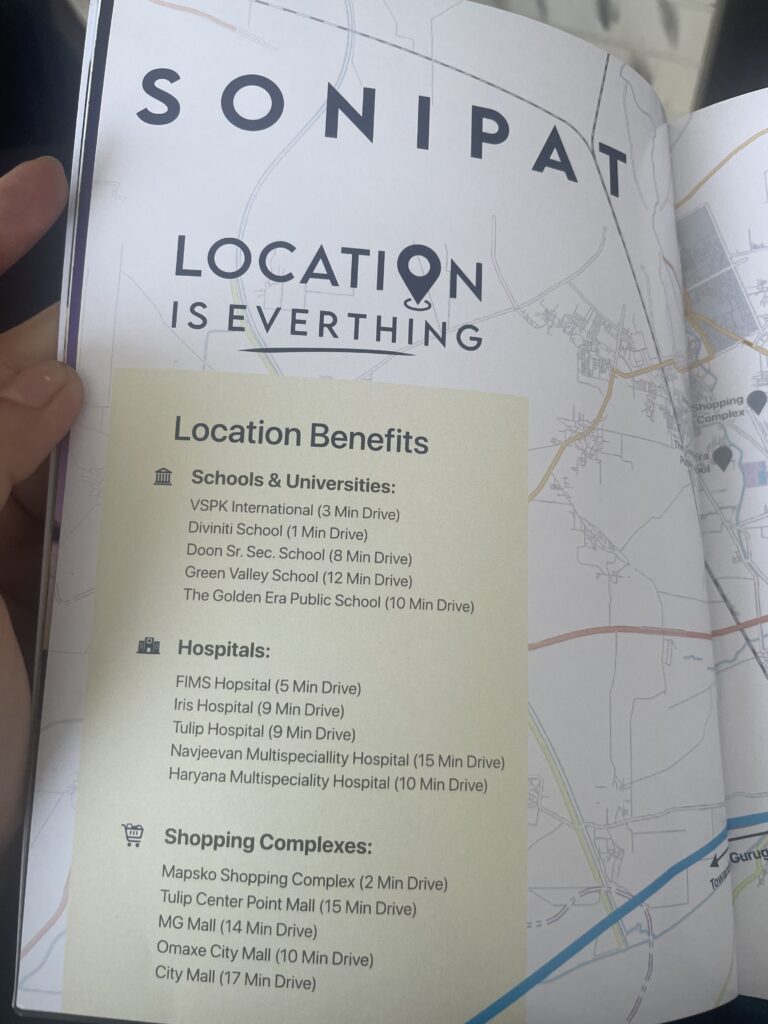


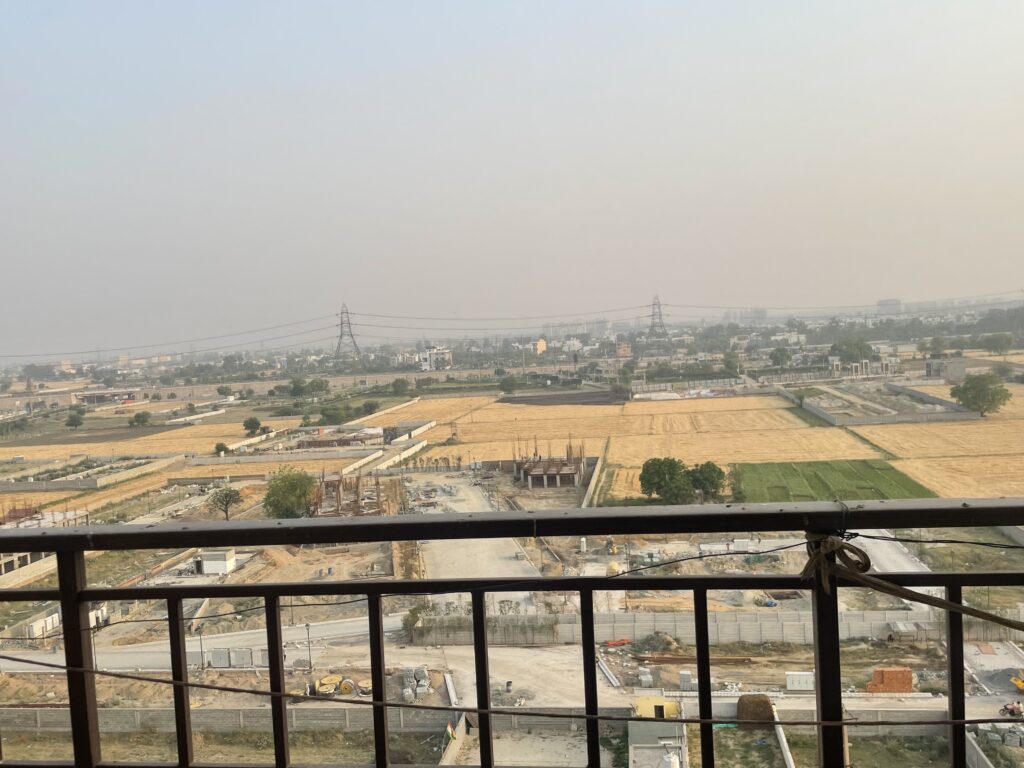
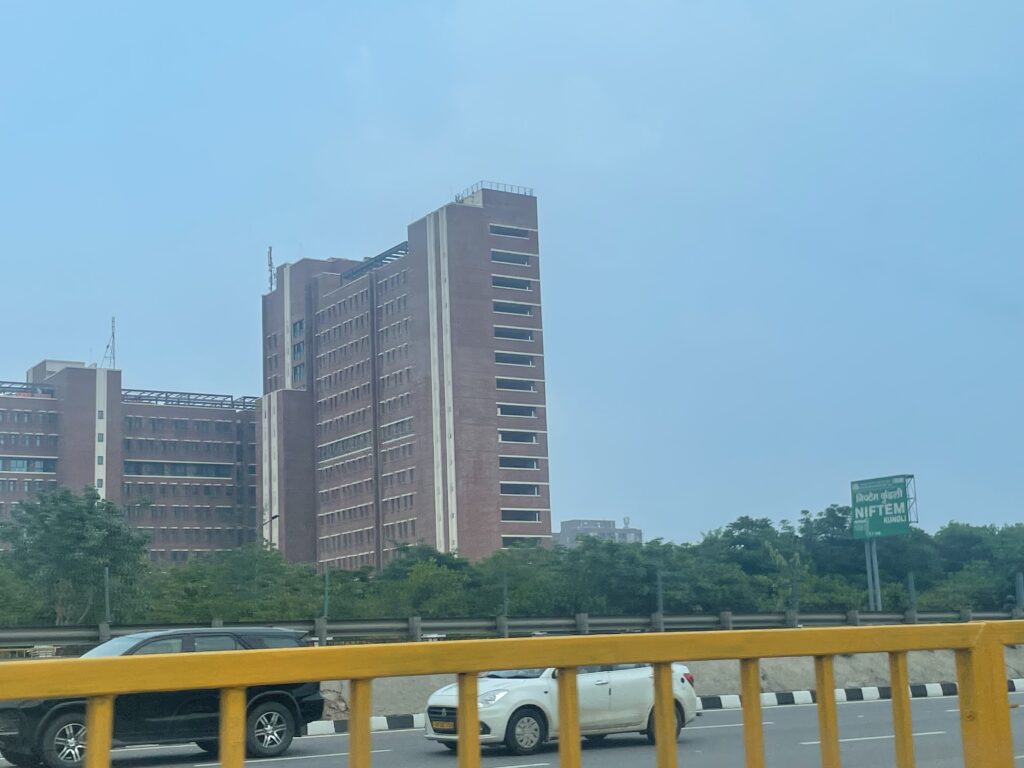

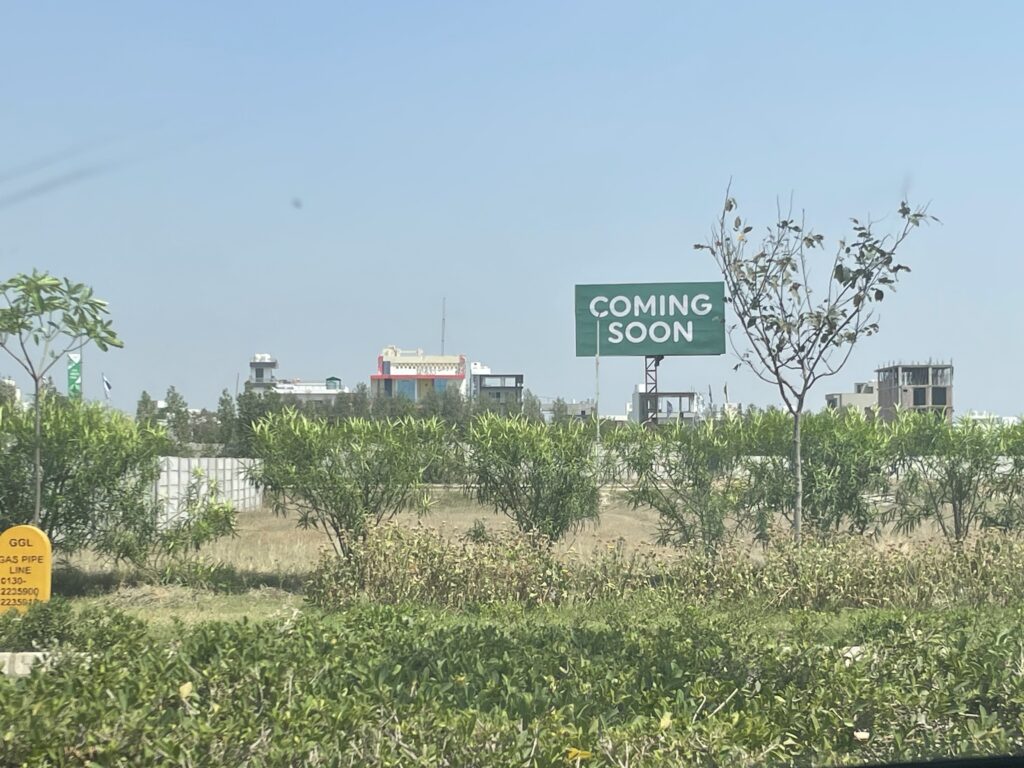
This short essay, along with its accompanying images, attempts to capture the emerging hyper-mediated and alienated university spaces in urban peripheries, exemplifying what has been described as ‘spectacle’. These corporate spaces of higher education in a country like India only deepen caste-class divides and erode postcolonial ideals of collectivism, whether in the shared imagination of higher education, urban livelihoods, or the welfare state that India once sought to uphold.
All photographs were captured by the author during fieldwork conducted from 2023 to 2025. The views and interpretations presented here are based on the author’s fieldwork experiences and personal observations.
Shehana is a research fellow of the School of Social Sciences, Jawaharlal Nehru University (JNU), Delhi, whose areas of interest include sociology of space, urban higher education, and class inequalities.